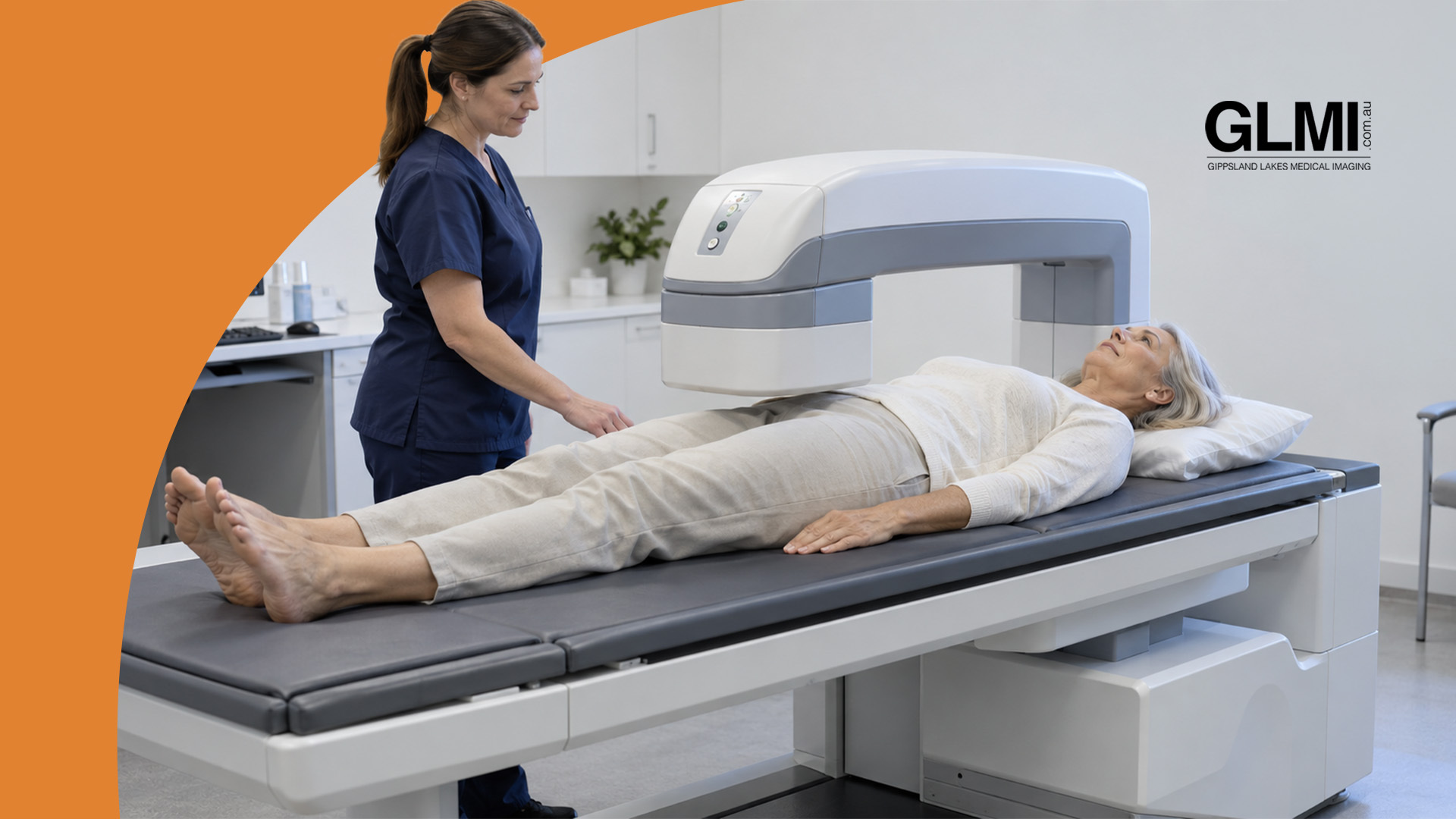
What is a DEXA scan? A DEXA scan that measures the strength and density of your bones. Painless and quick, it helps detect osteoporosis and osteopenia before a fracture happens.
With World Osteoporosis Day falling on the 20th of October, let this be your timely reminder to not overlook your bone health. At our Gippsland Lakes Medical Imaging Lakes clinic, you can get a simple DEXA scan and assess the strength of your bones, catching the issue early.
This scan, short for dual energy X ray absorptiometry, works by passing two low dose X ray beams through your body, usually focused on the hip and lower spine. The difference in how each beam is absorbed by bone versus soft tissue allows the machine to calculate your bone mineral density with a high degree of accuracy. You simply lie still on a table while the scanner arm passes above you, and there is no preparation required beyond avoiding calcium supplements on the day of your appointment.
Results are reported as a T score, which compares your bone density to that of a healthy young adult, and a Z score, which compares it to people of your own age and sex. A T score between negative one and negative two and a half generally indicates osteopenia, or reduced bone density, while a score below negative two and a half points to osteoporosis. Your referring doctor will talk you through what these numbers mean for your particular situation.
Osteoporosis is often called a silent condition because bone loss rarely causes symptoms until a fracture occurs, which is exactly why screening matters so much. Women over 50, particularly those who are postmenopausal, carry a significantly higher risk, though men are far from immune as they age. Other common risk factors include a family history of osteoporosis or fractures, long term use of corticosteroid medication, low body weight, smoking, excessive alcohol intake, and conditions such as coeliac disease or rheumatoid arthritis that affect how the body absorbs calcium.
If you have already experienced a minimal trauma fracture, such as breaking a wrist from a minor fall, this is often the clearest signal that your bone density needs checking. A DEXA scan Medicare rebate is available for eligible patients who meet the Medicare bone density criteria, so it is worth discussing your risk factors and referral options with your GP.
Cost is often one of the first questions people ask before booking in. Where a rebate applies, it is worth confirming any gap payment with our team beforehand. Without an eligible referral, the bone density scan test cost will vary depending on the clinic, so it is always worth checking directly with us so there are no surprises on the day.
Because low bone density rarely announces itself, most people only find out once a fracture has already happened. A few subtle signs are worth paying attention to in the meantime, including a gradual loss of height, a more stooped posture, or unexplained back pain that could point to a small compression fracture in the spine. None of these on their own confirm osteoporosis, but they are good reasons to raise the topic with your doctor rather than waiting.
Booking in for imaging should feel straightforward rather than daunting, and that is exactly how we approach every appointment across our Gippsland clinics. You will be asked to wear loose, comfortable clothing without metal fasteners, and to remove jewellery from the area being scanned. There is no fasting and very little preparation involved, and most patients are in and out within half an hour. The test itself is over quickly, and our team will make sure you understand what happens next, including how and when your results will reach your doctor.
Our staff are happy to answer questions about the process, your referral, or what your results are likely to mean before you even lie down on the table.
We understand that many people put off a bone density check simply because they are not sure it applies to them, or because a referral has been sitting in a drawer for longer than they would like to admit.
For most people with normal results and no significant risk factors, a repeat scan every five to ten years is generally sufficient. If your results show osteopenia, or if you are being monitored for treatment effectiveness, your doctor may recommend a follow up scan every one to two years instead. This is a conversation worth having at your initial appointment so you know what to expect going forward.
Bone health is easy to put off until it becomes a problem, but a DEXA scan gives you and your doctor real information well before that point. Take the referral that has been waiting and book DEXA scan with us at our Lakes Entrance clinic. (Please note, DEXA scan is only available at Lakes clinic).